Prototype Access Hatch
Details
Can you imagine having a beautiful sixties sports car — maybe an AC Cobra, a Ferrari 250, or a Jaguar E-type — then fitting a white plastic bonnet scoop to it? Of course not, it would looks totally out of place, not to mention ugly. Which brings me on to the topic of water heaters.
An RV water heater requires an access door for maintenance, which also serves as an exhaust. The doors are modern because the heater is modern. The doors are also vertically flat, because a modern RV has vertical flat walls. Which brings me onto the problem: a white modern door on the side of a vintage Airstream looks awful because it is an aesthetic mismatch, and doesn't integrate into the curved wall. It looks a bit like this example below. $150,000+ for that sort of attention to detail? You must be kidding.
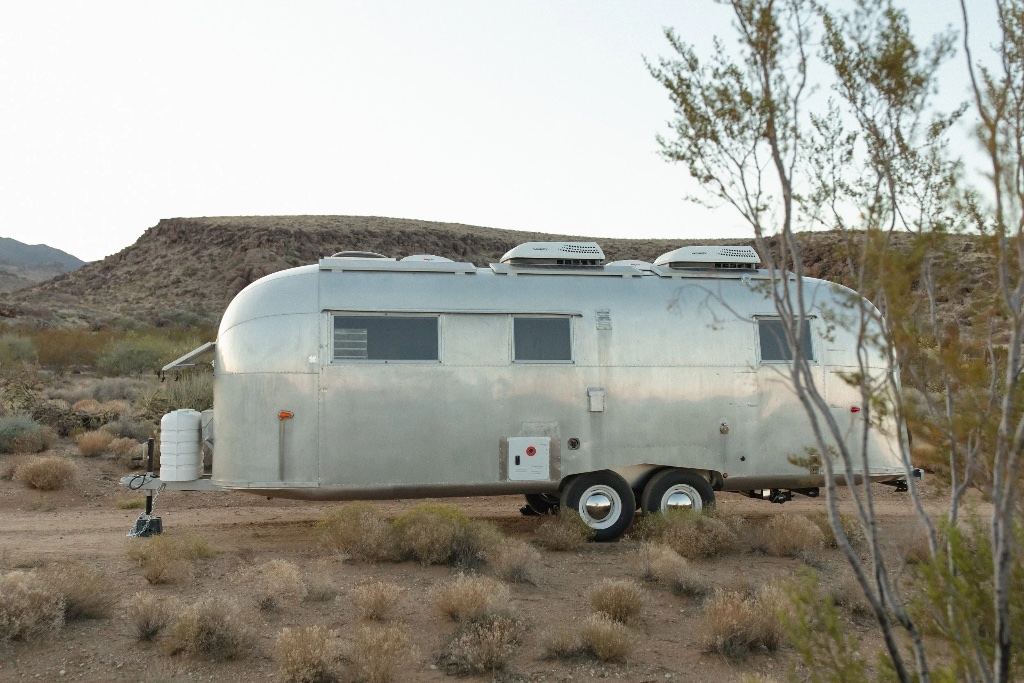
I wanted to create an access door that replicates the hingeless style of the existing baggage doors on the airstream, so that it is effectively invisible: seamlessly integrated into the wall of the trailer. It's these sorts of details that really matter to me. However, I quickly realized why nobody I've seen has done it — it is very tempting to put it into the "too hard" box.
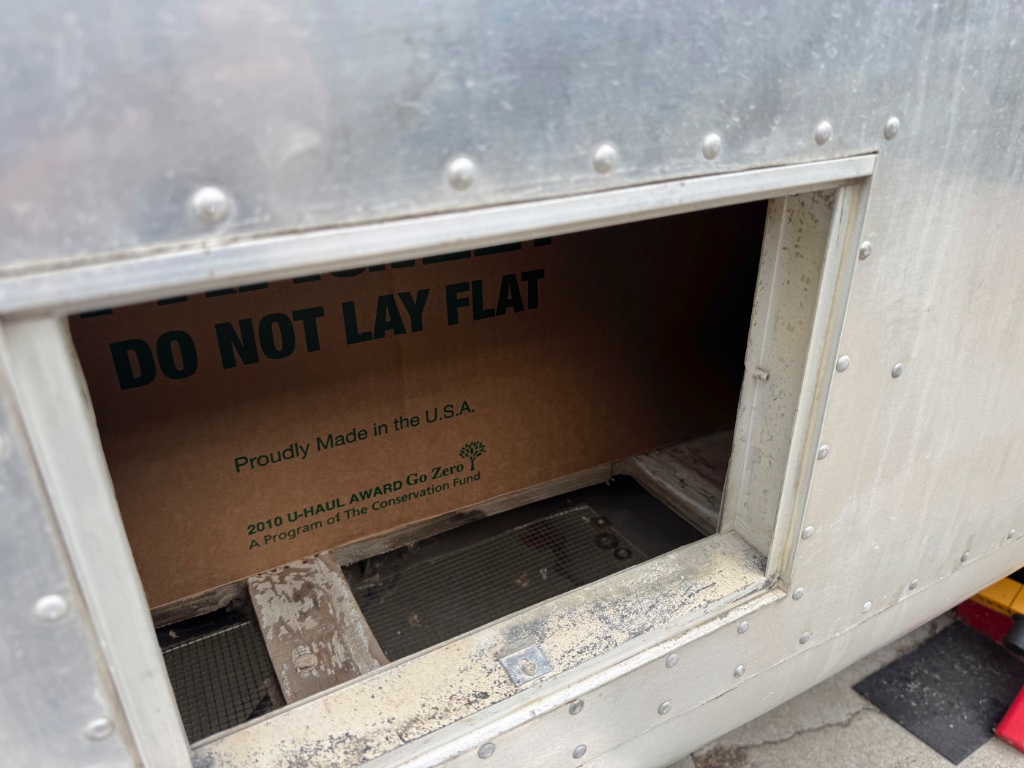
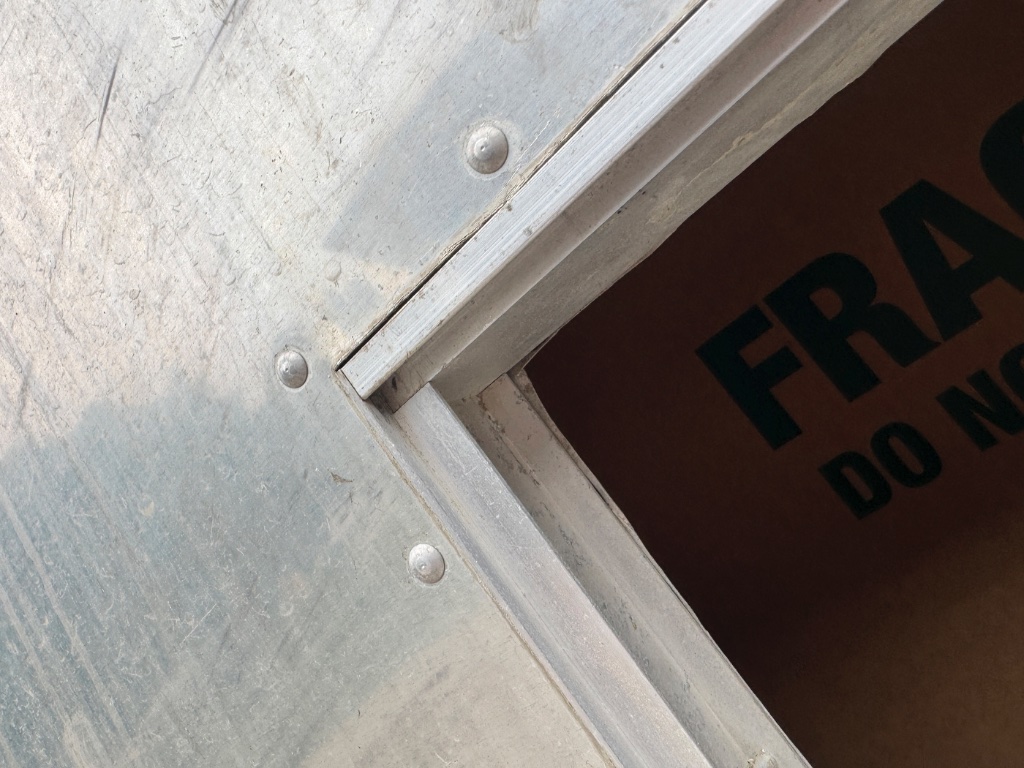
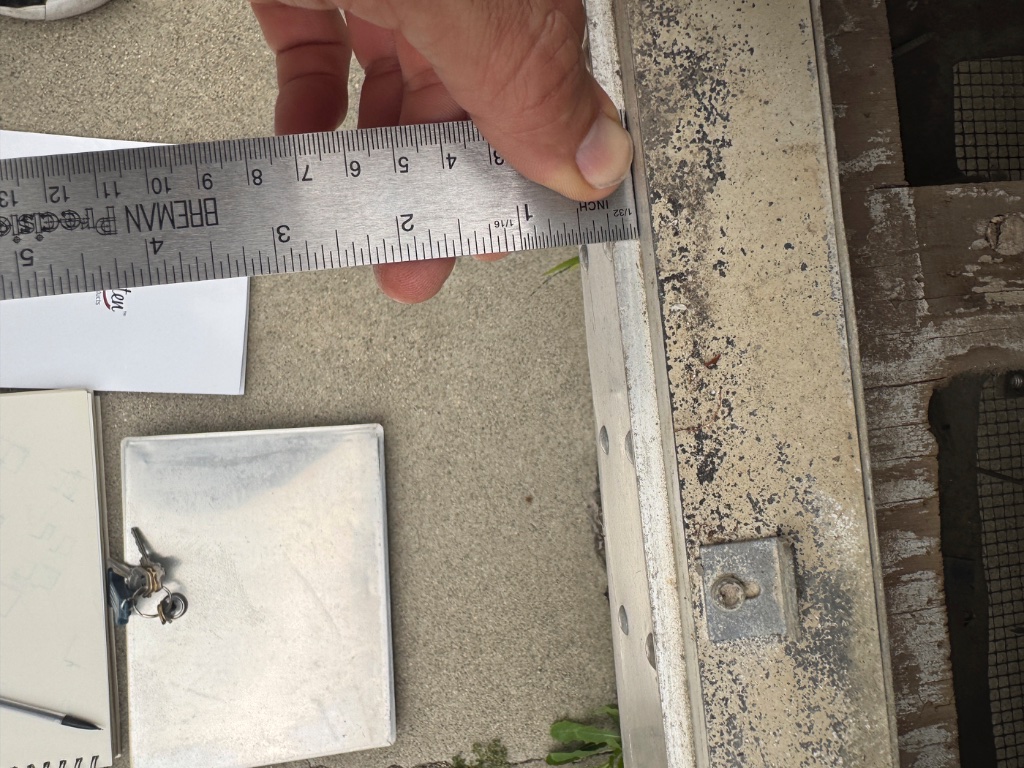
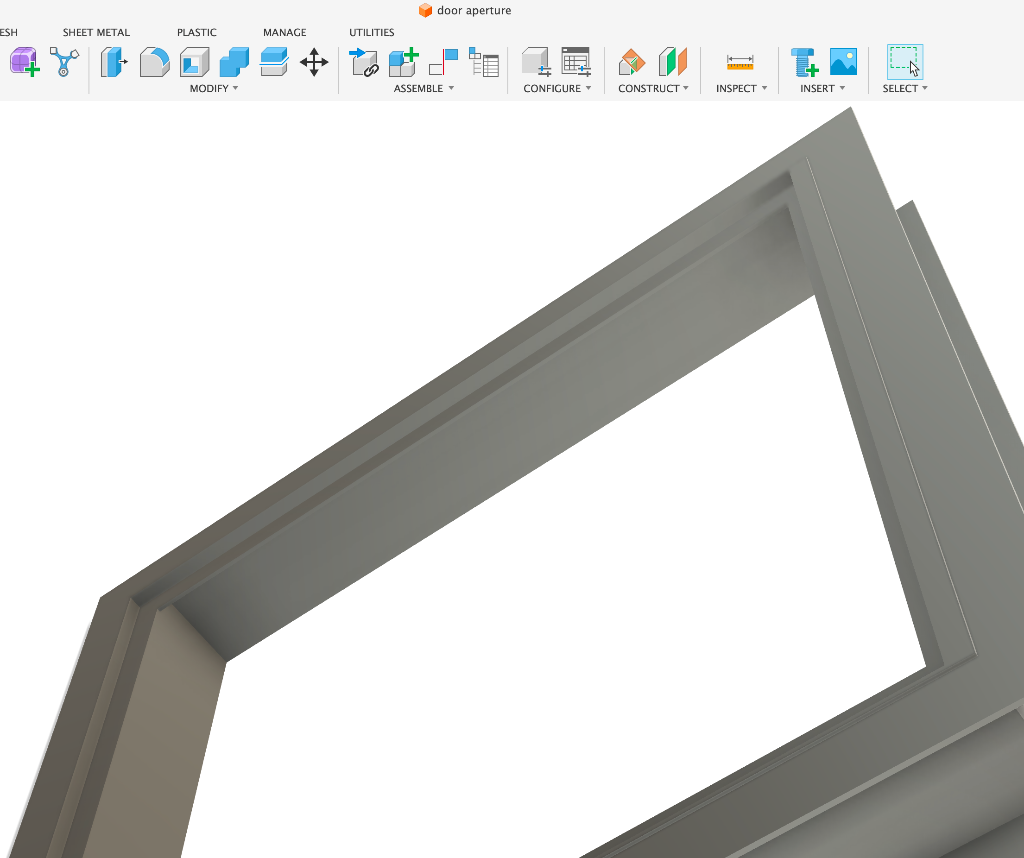
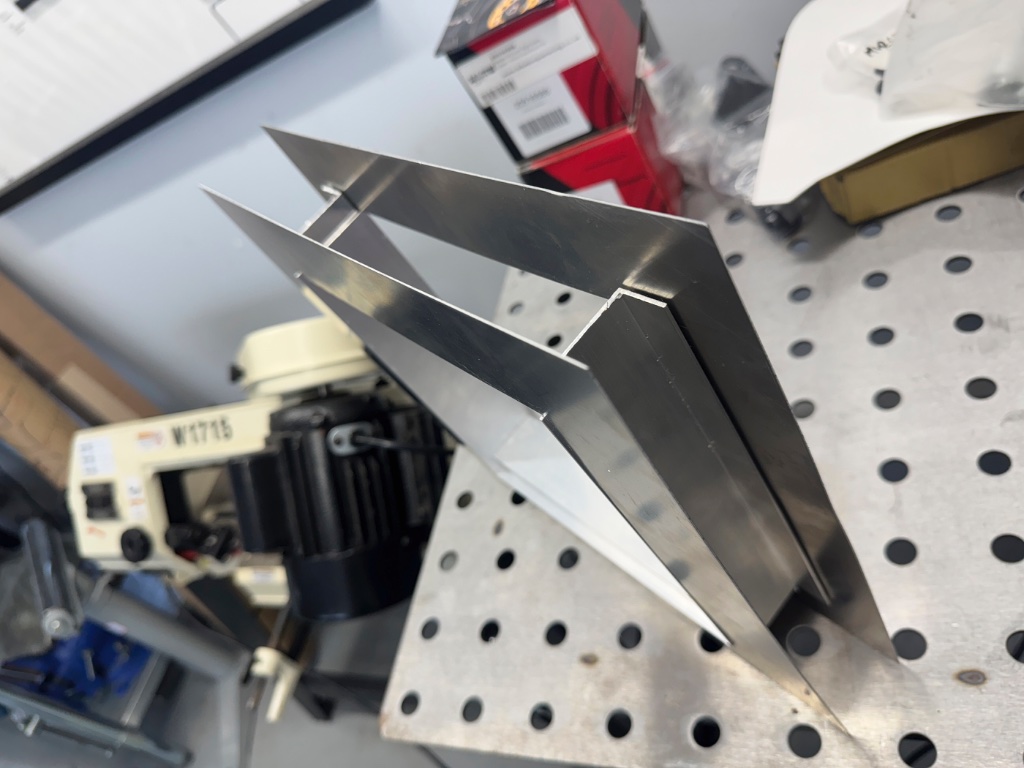
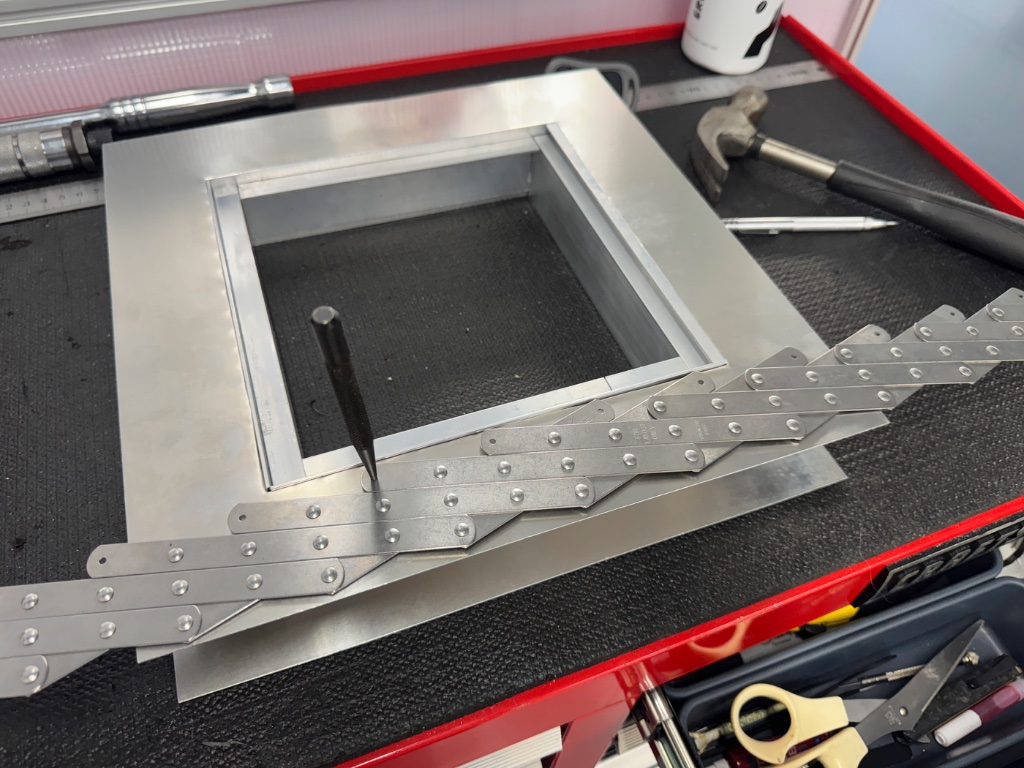
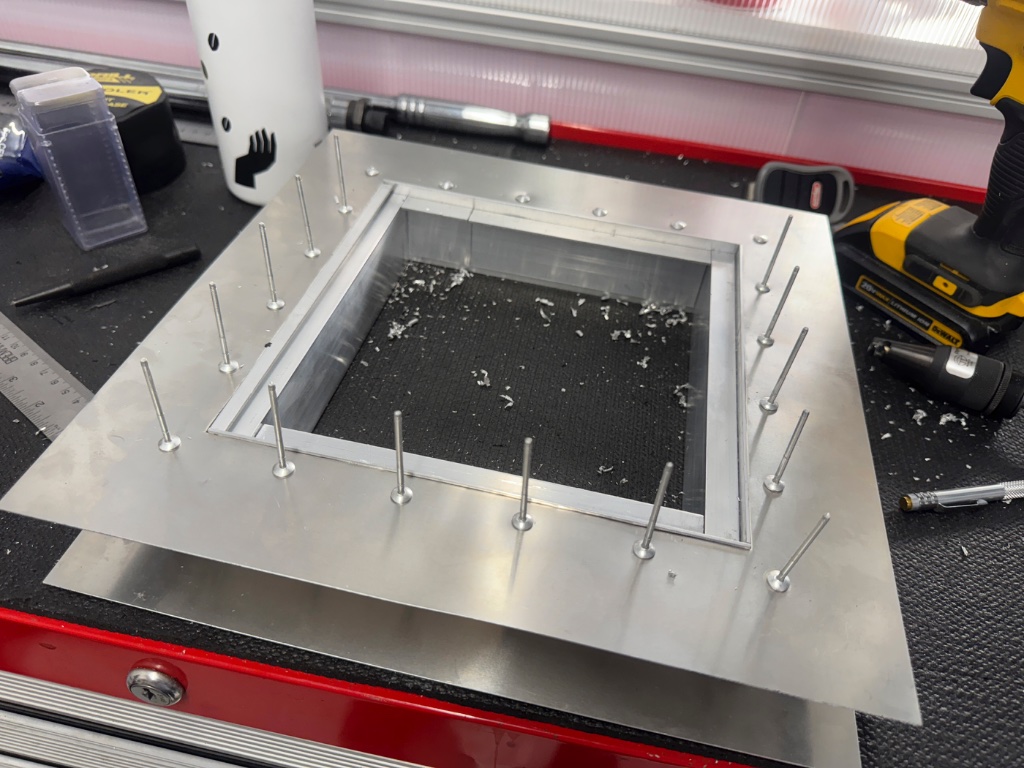
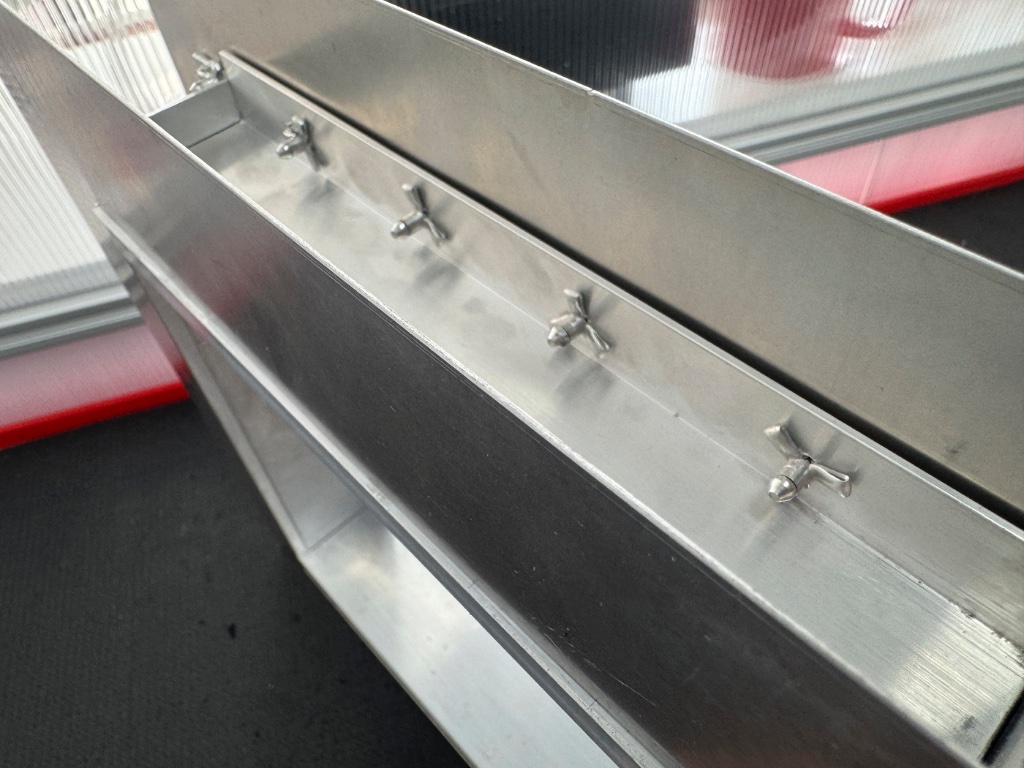
The existing baggage door apertures are made from custom extrusions combining various lips and recesses. The only way to figure out how to make it was to take precise measurements of the whole thing, model it in CAD, then work out how to replicate it by gluing together off-the-shelf L and U shaped aluminum channels.
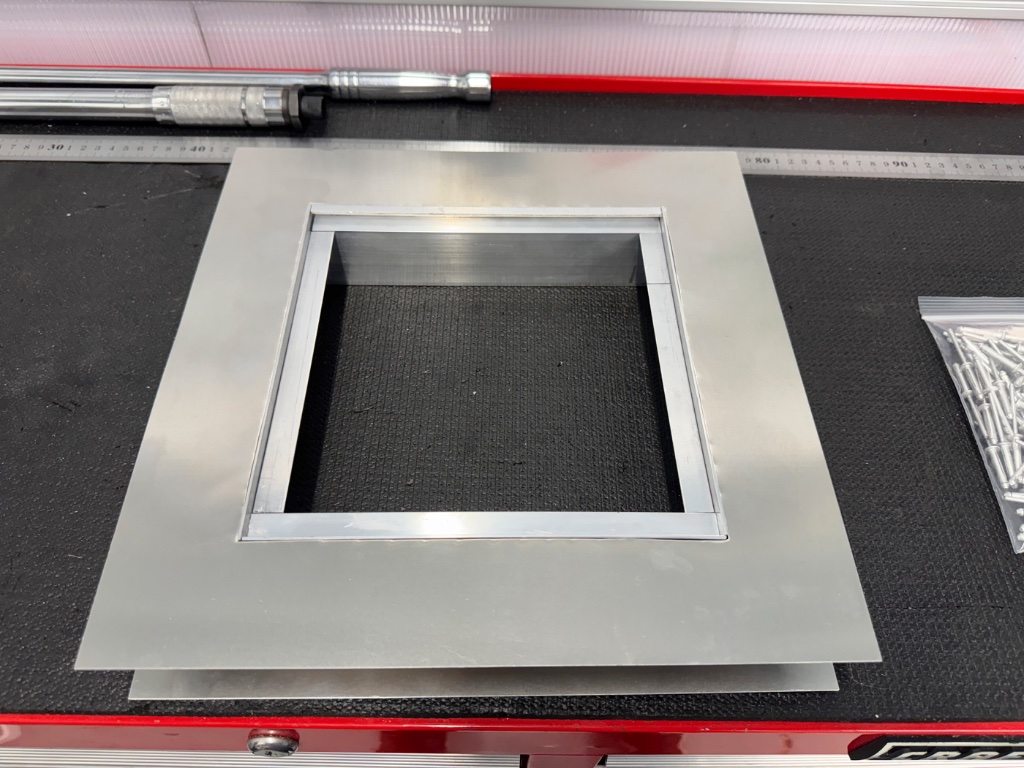
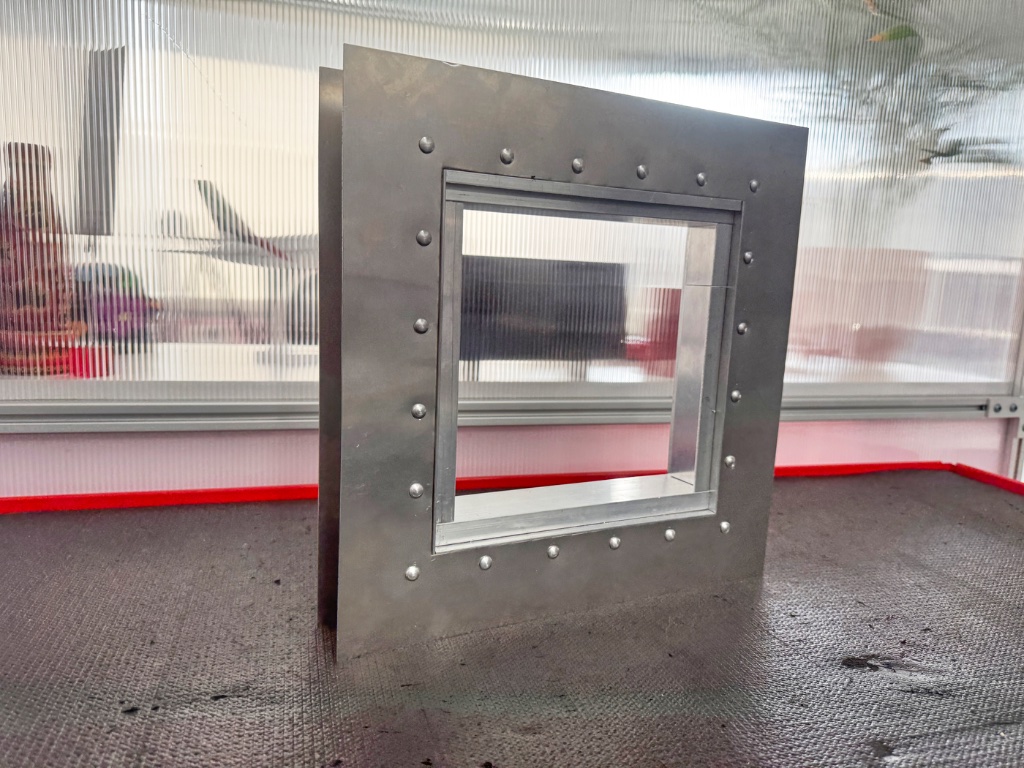
I worked it out eventually, after more hours than I care to admit, and made a prototype which is an exact replica of what you'd see if you opened one of the existing baggage doors. This also gave me the opportunity to practice buck and olympic riveting — two of the techniques I'll need to master when it comes to the real thing.
I've not worked out the door yet. But that's comparatively easy compared to the aperture that the door goes in.